Plays your add-ons on every screen you own.

Nebula is a free player for the TV, the desktop and the phone. Add a source and it turns into a library, with artwork, episode lists, subtitles and your place kept across screens. There is no account to make and no email to give.

Free to use. Nebula does not host, store or provide any media.

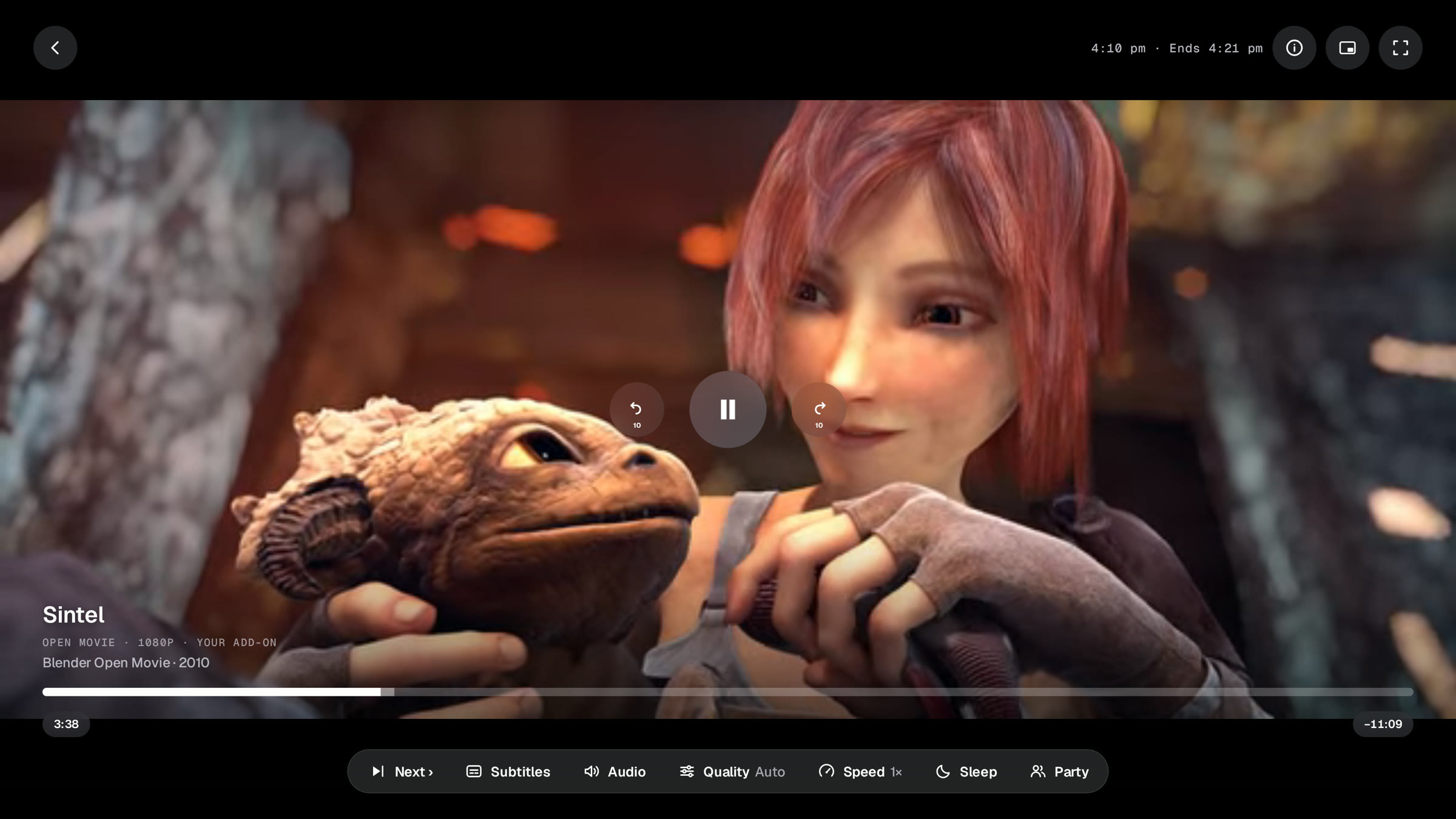
Nebula playing a film on a TV, with the title, its source and the toolbar showing
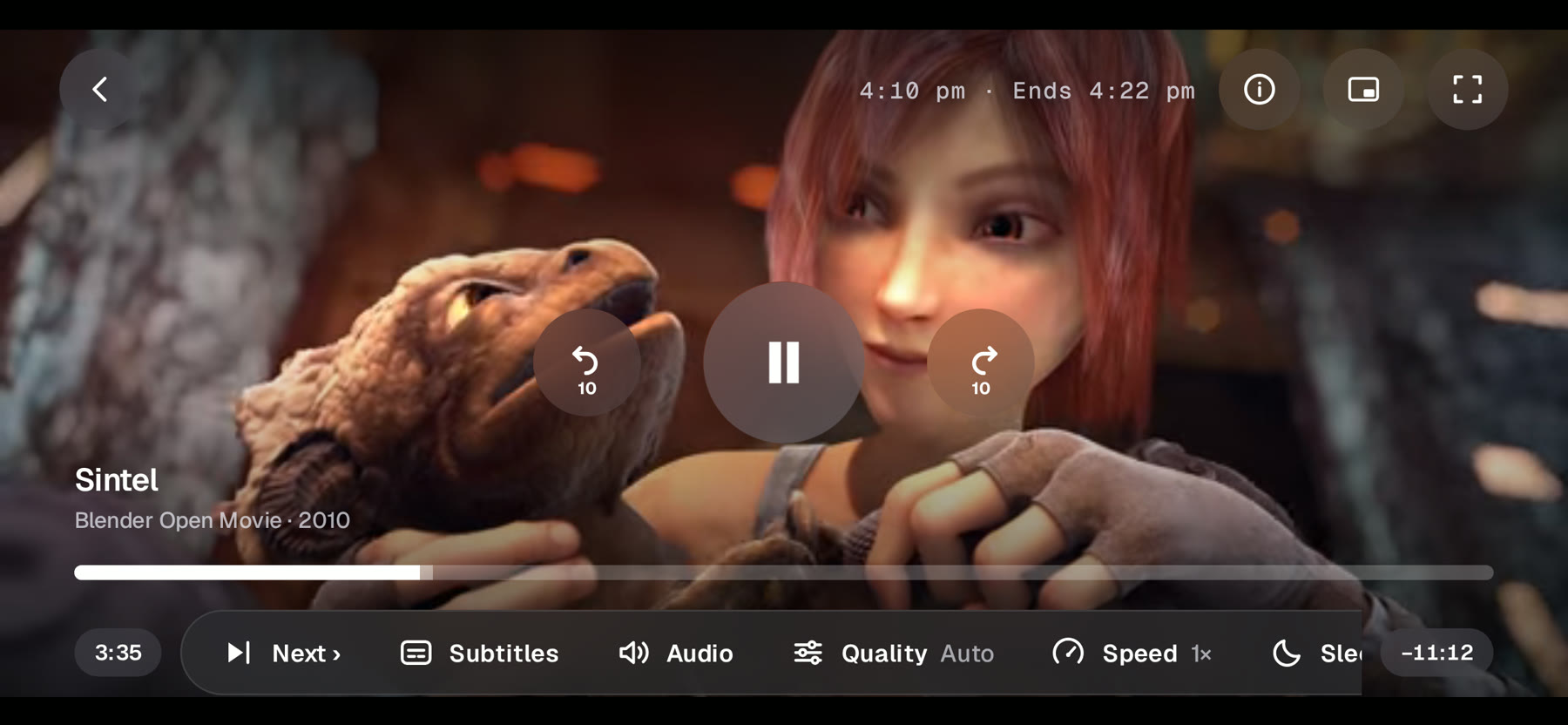
The same film playing on a phone held sideways
Android iPhone Android TV Windows Linux Mac LG webOS Web

Pick your screen.

Each version is made for the screen it runs on. Choose yours and the download is right here.

Nebula for phones and tablets

Browse, search and play on the phone. Sign in with a profile and your library and progress carry over to the TV. On Android, one file covers phones, tablets and Android TV.

Android phones and tabletsv1.73.0
Install notes
  1. Open the downloaded file. Android asks once to allow installs from your browser.
  2. Updates install over the old version and keep your add-ons and progress.
iPhone and iPad, iOS 16 or laterv0.2.0
Install notes — read these first
  1. Nebula is not on the App Store, and this file is unsigned: you sign it yourself with your own Apple ID. The first install needs a Windows or Mac computer.
  2. On the computer, add Nebula.ipa to AltStore, SideStore or Sideloadly and sign in with your Apple ID. Then on the phone, open Settings, General, VPN & Device Management, and trust your Apple ID.
  3. A free Apple ID signs an app for seven days at a time. AltStore and SideStore renew it for you; with Sideloadly you repeat the step each week.
  4. This version was built and checked on build machines only. If something is off on your phone, please open an issue.

Nebula for Android TV and LG TVsv1.80.0

The whole player, laid out for a remote. On Android TV, type a short code into the Downloader app. On an LG TV, add the repository in the Homebrew Channel and install from its list.

Install notes
  1. Android TV: install Downloader from the store, enter 7664693, and allow it to install apps when asked. Voice remotes can read the code out.
  2. LG TV: install the Homebrew Channel once (it needs developer mode), then Settings → Add repository → paste the address. Nebula appears in the list; updates arrive there too.
Android TV code for the Downloader app
7664693
LG TV repository for the Homebrew Channel
https://retrocodes12.github.io/nebula-player/apps.json

Nebula for the desktopv1.78.0

The same player in a window, with a mini player that stays on top while you work. Windows 10 and 11, or a 64-bit Linux desktop; both keep themselves up to date. On a Mac there is a native app.

Install notes
  1. Windows: Portable needs no install — download it and double-click. The app is not signed, so Windows may warn the first time. Choose More info, then Run anyway.
  2. Linux: the AppImage needs no install either. Download it, tick Allow executing file as program in its properties, and open it. The .deb installs it like any other app: open it with your software installer, or run sudo apt install ./Nebula.deb.
  3. Mac: open the download and drag Nebula to Applications. The app is not notarised, so the first time, right-click it and choose Open. It tells you when a newer version is out.
Windows 10 and 11, 64-bit Linux, 64-bit macOS 13 or later, Apple silicon and Intelv0.2.0

Nebula in the browser

Nothing to install. It is the same player, and it works best in Chrome or Edge, which carry the decryption module. Your add-ons stay in the browser, or in your profile if you make one.

What it is like to use.

You bring the add-ons. Nebula makes the pages, finds the pictures and the subtitles, and takes care of the small things that make an evening of episodes easy.

Subtitles, sorted by language

Open the panel and every subtitle for the film is there, grouped by language with a count, whether it came with the file or from an add-on. Timing and size sit next to the list, so a track that runs early can be nudged without leaving the picture.
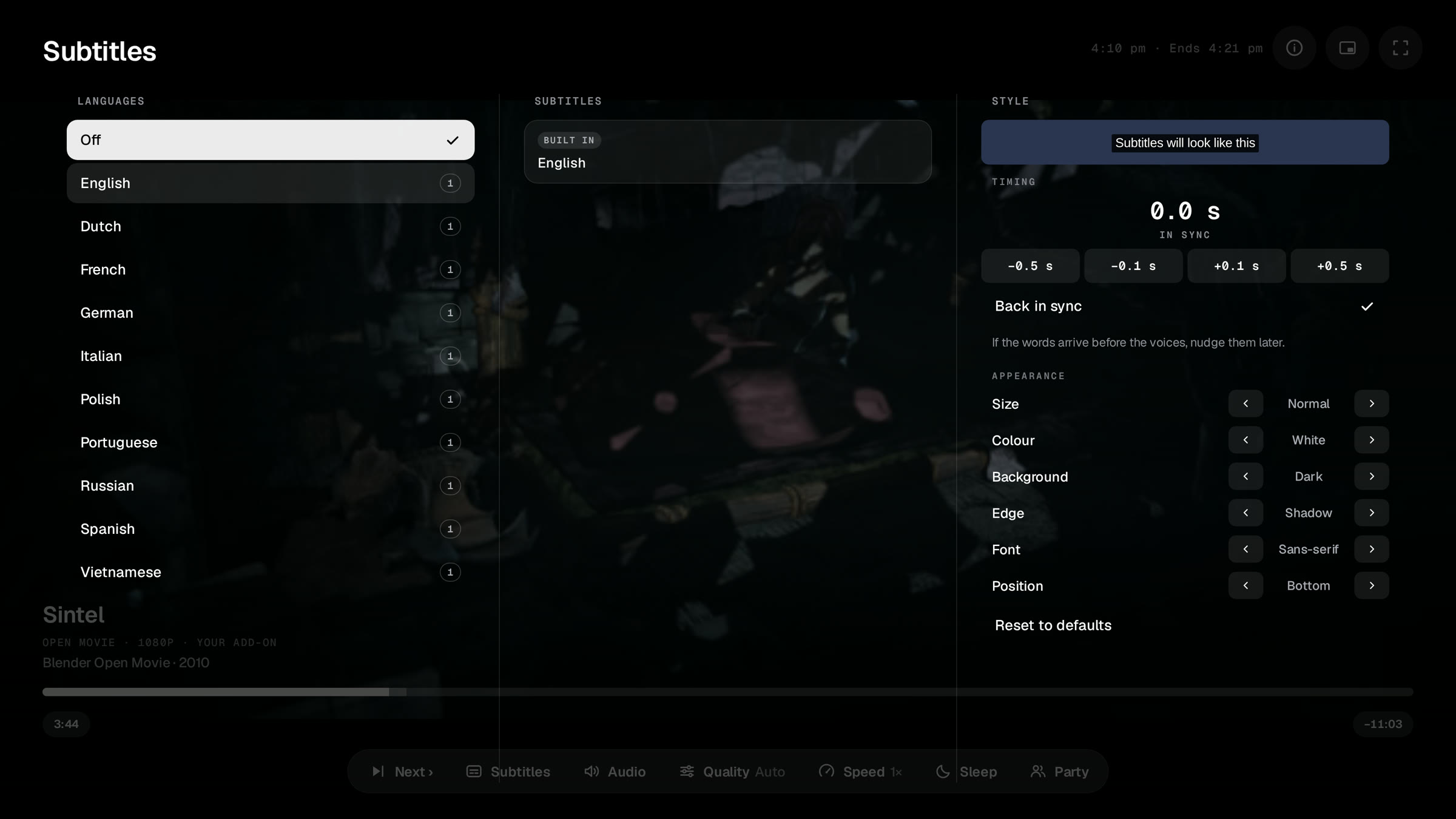
The subtitles panel: languages with counts, the tracks for one language, and timing and appearance controls

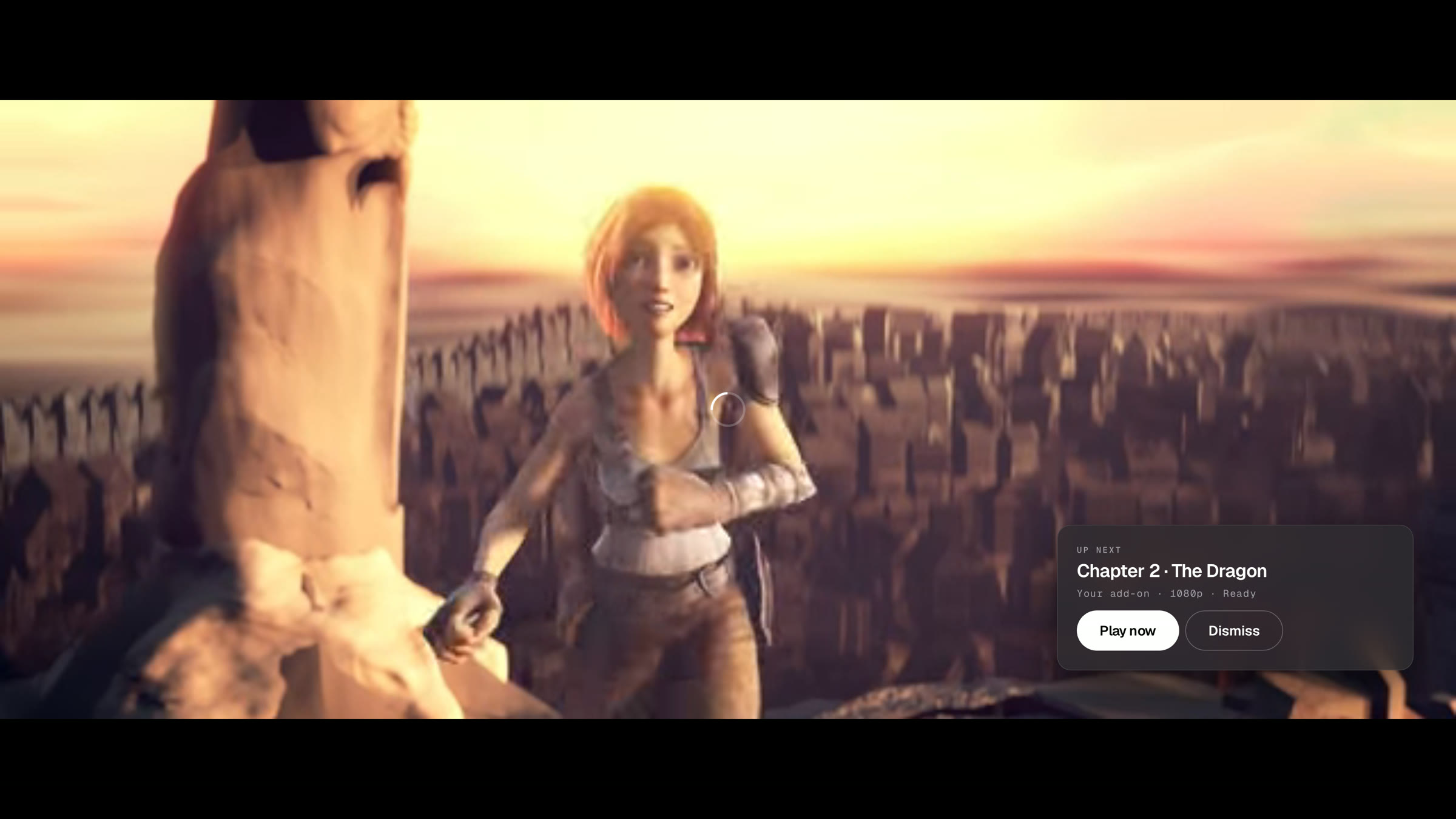
The next episode is already lined up

Nebula remembers which source you picked for a show. Near the end it fetches the next episode from the same place, so Play now starts it straight away, and if you do nothing it rolls on by itself.

An Up next card over the closing scene, with the source already chosen

Playback that keeps out of the way

Press play and it plays. Nebula skips the recap and the opening when it knows where they are, and the closing credits bring the next episode forward. A whole season in one sitting, without reaching for the scrub bar.

  • Skips intros and recaps, on its own if you prefer
  • Finds the next episode's stream while you are still watching
  • A sleep timer for the last episode of the night
  • Picture quality set once: automatic, best available, or data saver
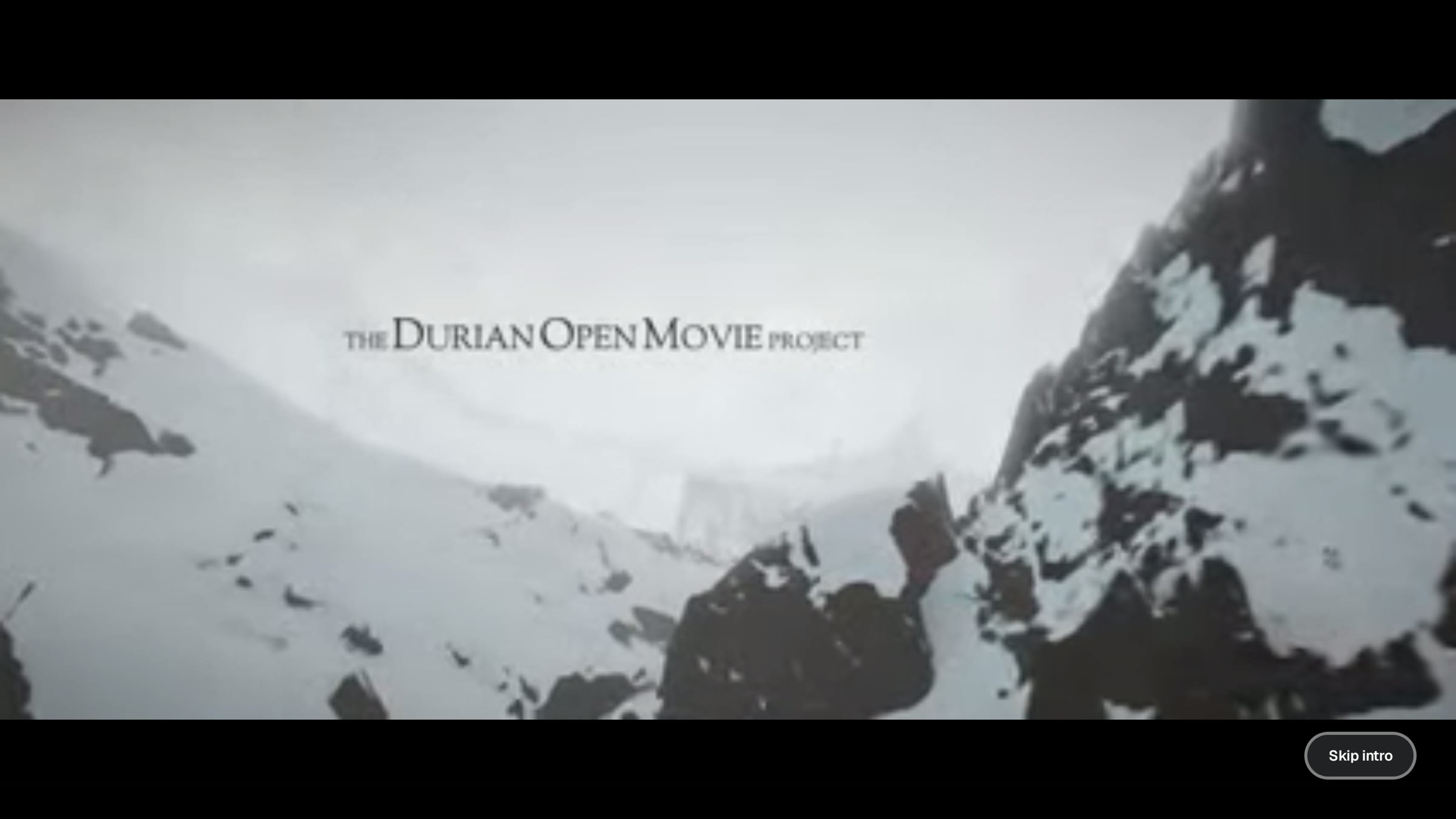
A film's opening titles with a Skip intro button in the corner

Pause, and the details show up

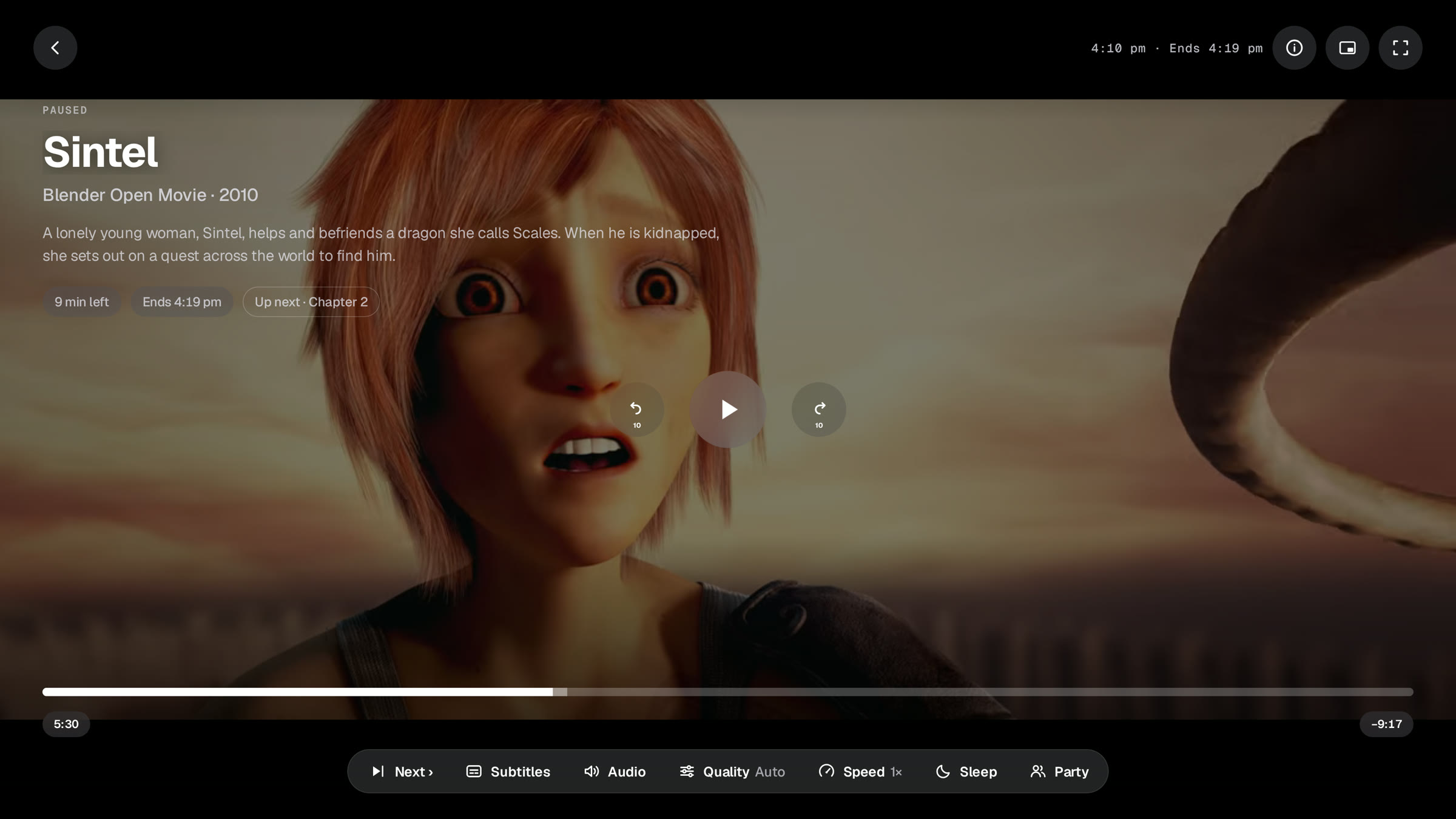
Leave it paused for a moment and the title, the synopsis and the time left fade in, with the time it will finish. The clock sits in the corner while the controls are up, so you can tell whether there is room for one more.

The player paused, showing the title, synopsis and time remaining

A profile without an email

Pick a handle and a password. Your add-ons, progress, list and ratings follow you to every screen you sign in on. A TV signs in with a short code that you approve from your phone, so there is nothing to type with the remote.

Less waiting for the spinner.

A shaky source used to mean a spinner every few minutes and a walk back to the stream list. Four things now work together so it stalls less, and when it does, you are one press from a better source.

  • Buffer ahead. Choose one, two or four minutes of video loaded ahead of you, on every screen.
  • Play through your PC. A TV can only hold so much. Turn on sharing in Nebula on a computer on your network and the TV plays through it, with minutes of video held on the computer instead. The two find each other through your profile.
  • A switch when a source keeps stalling. After the third stall a button offers the next stream that fits your connection. One press, and it picks up on the same second.
  • Marked before you press play. Streams faster than your connection can carry say "may stall here" and sink below the ones that fit. Automatic picking never chooses one.
How long a source can go silent before the picture stops
A TV on its ownabout 10 seconds
What a TV's memory holds ahead of you by default. The spinner appears almost as soon as the source pauses.
Buffer ahead at four minutesup to 4 minutes
As much as the device can hold. A computer reaches the full four minutes; a TV aims lower, and the playback info panel says how far it got.
Through your PCabout 8 minutes at 1080p
The computer keeps half a gigabyte of video ahead of the TV: around eight minutes of 1080p, or three and a half of 4K. The TV's own memory no longer sets the limit.
02 min4 min6 min8 min10 min

An illustration, not a measurement: the figures follow from how much video each part holds, at a typical bitrate. Real results depend on the source, the connection and the device, and a live broadcast can only run as far as it has been broadcast.

When
Before
With this release
The source pauses for a minute
The picture stops within seconds and waits for the source to come back.
It plays on. With two minutes loaded ahead, or your PC sharing, the pause passes unnoticed.
The source keeps stalling
You back out to the stream list, pick another, and find your place again.
After the third stall, one press switches to the next stream that fits, on the same second.
A stream is too fast for your connection
It looks like every other row until it stalls.
It is marked "may stall here" and sinks below the ones that fit. Automatic picking never chooses it.
A live broadcast
Whatever the source delivers, when it delivers it.
The same. Nothing can run ahead of what has been broadcast, so live gains only smoothing, and more buffer means more delay.

Works with the add-ons you already have.

Catalogs and streams come from the add-ons you install. Paste a link once, or scan a code from your phone to add one to the TV. Nebula asks each add-on for four things and lays them out the way a streaming app would.

Catalogs

Rows on Home, in the order you choose. Hide the ones you never open.

Title pages

Artwork, cast, ratings, seasons and episodes, with your place marked.

Streams

Every add-on's streams in one list, labelled by resolution, size and language.

Subtitles

Downloaded, cleaned up and re-timed on the device, in the style you set.

Made in the open.

The player, the Android app, the desktop app and the Apple apps are public on GitHub. Read the code, build it yourself, or send a patch. Every release is built by the repository's own workflow.

Releases in the last 30 days
8Screens: Android, Android TV, LG TV, iPhone, Windows, Linux, Mac and the web
Open on GitHub
Latest releases
nebula-playerwebOS 1.80.0Sep 19, 2026
nebula-android1.73.0Sep 20, 2026
nebula-desktop1.78.0Sep 19, 2026
nebula-mac0.2.0Sep 21, 2026
See every release

Set it up once, on whichever screen is nearest.

Install takes a minute. Sign in with a profile on one screen and the others pick up where you left off.